A Santa Barbara roof replacement goes smoothest between May and October. The surest way to land one of those dates is to call in February or March, while the summer calendar is still wide open.
Most of the roofing advice you'll find online assumes you live somewhere with snow, so it tells you to finish before winter cold sets in. Here, the thing that stalls a roof job is rain, and on the Central Coast nearly all of it falls between November and March. For roof replacement, Santa Barbara homeowners have one deadline worth planning around: getting the old roof off and the new one sealed while the weather stays dry.
We've been replacing roofs across Santa Barbara County since 1996. The projects that go smoothly were almost always planned over the winter.
TL;DR Quick Answers
Roof Replacement Santa Barbara
Schedule a roof replacement in Santa Barbara for the dry season, May through October, and book it in late winter or early spring. Here, rain sets the schedule, and most of it falls between November and March.
Install time: Three to five days for most homes.
Start date: Usually two to four weeks after you approve the estimate.
Lead time: Permits and HOA reviews, common in Montecito and Hope Ranch, add weeks, so call early.
Material timing: Tile, flat, and slate roofs do best in mid-summer conditions.
Already leaking: Protect the roof now and replace it at the first dry window.
Top Takeaways
Late spring through early fall, roughly May to October, is the best time to replace a roof in Santa Barbara.
Book in late winter or early spring so your permits and schedule are set before the dry season starts.
Rain is the main timing risk here, and most of it falls from November through March.
Tile, flat, and slate roofs do best with mid-summer conditions, while shingles are more forgiving.
A leaking roof shouldn't wait for an ideal month. Protect it now and replace it when the weather allows.
Roof Replacement in Santa Barbara: When to Schedule It
Why the Dry Season Gives You the Best Window
From June through September, measurable rain is rare in Santa Barbara. That's the stretch you want. The riskiest part of any replacement is the tear-off, when the old roofing is gone and the deck is open to the sky.
Most residential replacements take us three to five days, and in summer a window that short almost never gets interrupted. If you're weighing a roof replacement in Santa Barbara, the dry months give the crew predictable conditions for tear-off, deck repair, underlayment, and installation.
What Each Season Looks Like for Roof Work
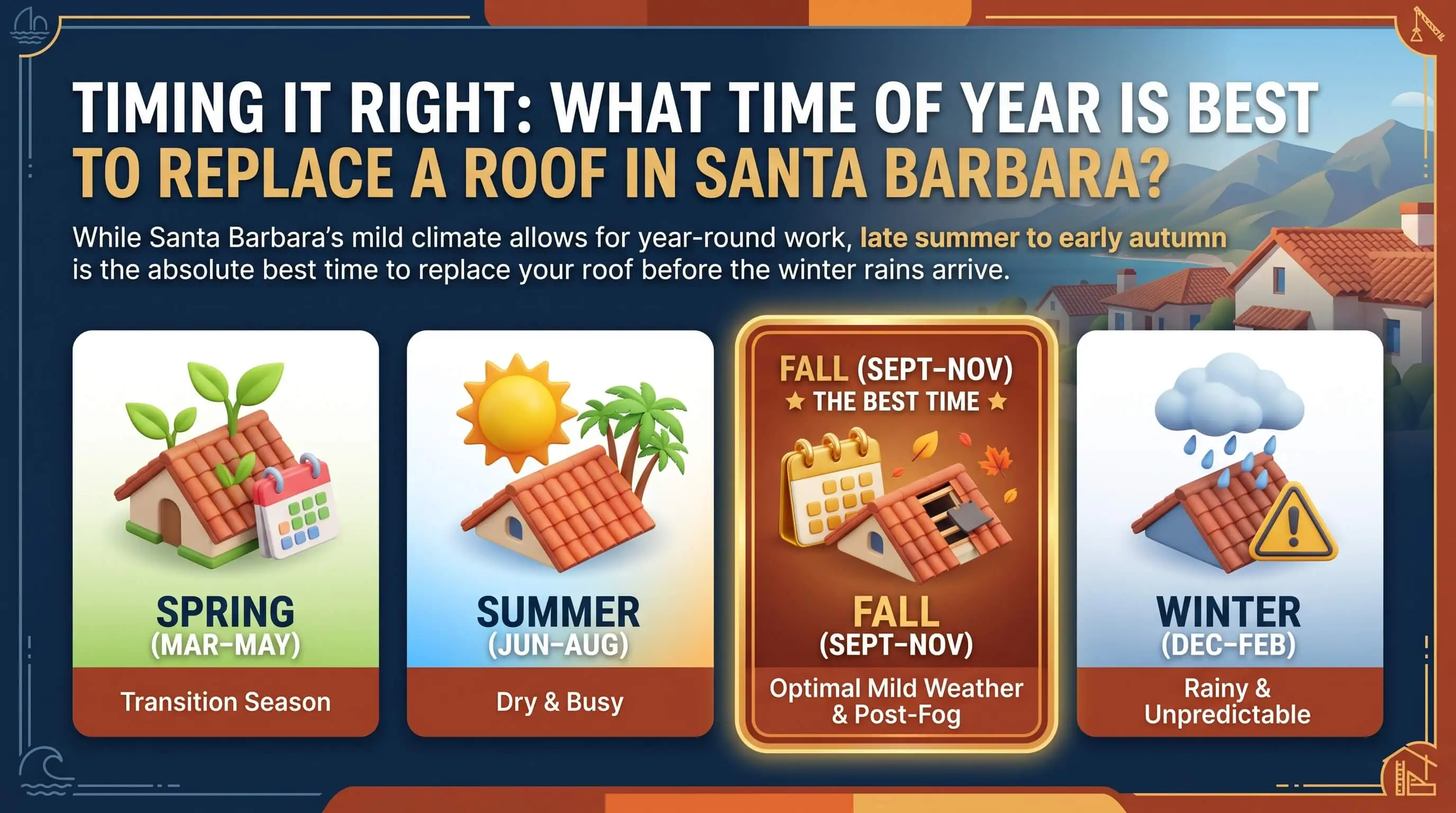
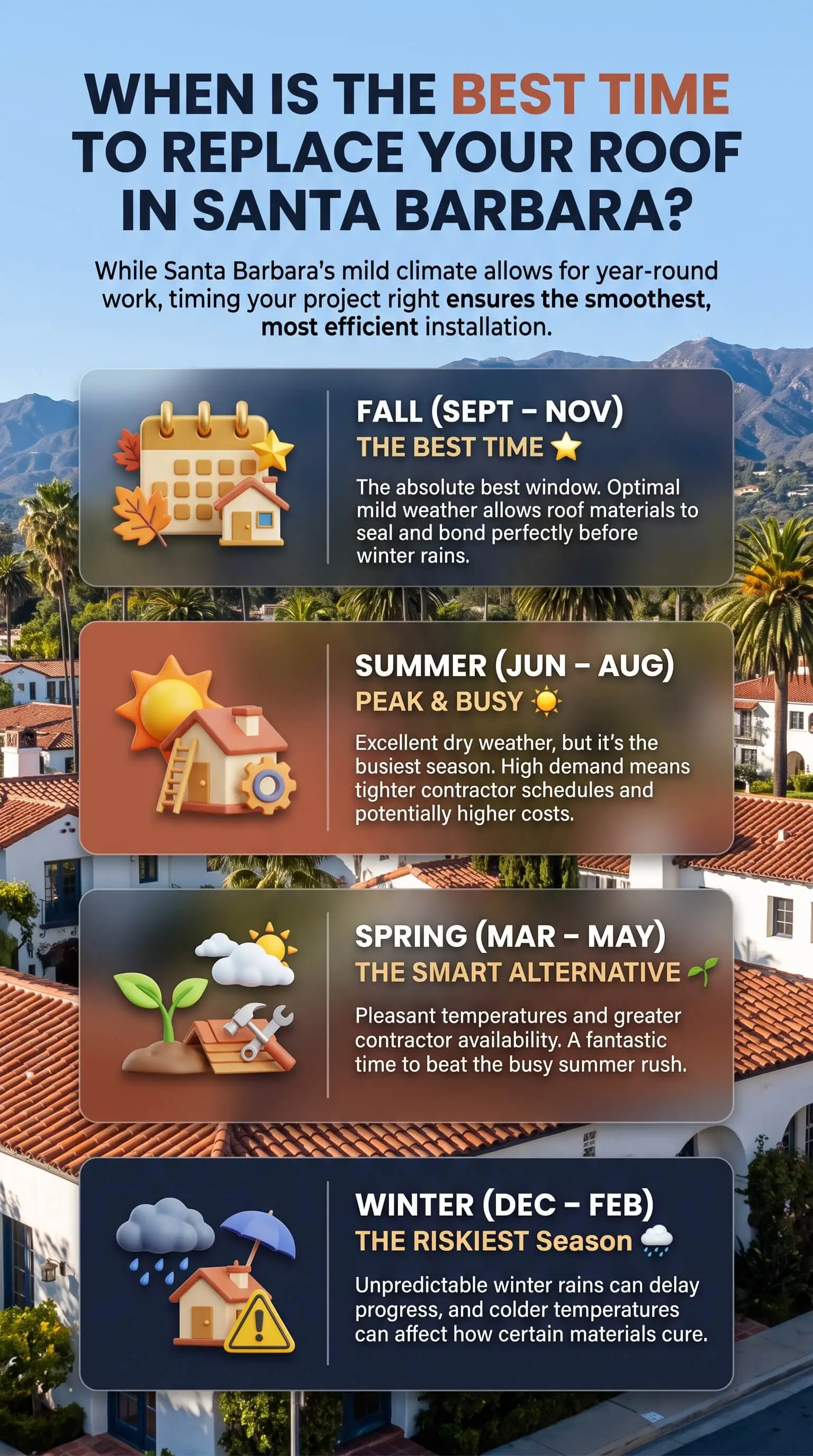
Spring (March to May): Storms can still roll through in March, but by late April things usually settle. Spring is when you want your estimate in hand and your permits moving.
Summer (June to August): You get the most reliable weather of the year along with the busiest calendar. Homeowners who booked in spring get first pick of dates.
Fall (September and October): September and October stay dry enough to make fall a good choice. We build a day or two of weather buffer into October jobs in case an early storm shows up.
Winter (November to February): We can replace a roof in winter, and sometimes we have to. We schedule each tear-off around the forecast, so we save winter mostly for urgent jobs.
Why the Planning Starts Months Ahead
Installing the roof is the fast part. Everything that has to happen before the first tile or shingle comes off takes longer:
A full roof assessment, including decking and ventilation
A written, itemized estimate
Choosing materials that suit your home, your budget, and your fire exposure
Building permits and code review
HOA architectural approval, which comes up often in Montecito, Hope Ranch, and private communities
Scheduling, since most projects start two to four weeks after you approve the estimate
Call us in June and work may not start until late summer. Call in February and you're usually on the schedule for early summer.
How Your Roofing Material Changes the Timing
Some materials care about the weather more than others.
Asphalt shingles go on fastest and handle a tight schedule best.
Clay and concrete tile, which you'll see on so many Spanish and Mediterranean homes here, means staging a lot of weight on the roof over a dry, sound deck. Those longer jobs belong in the middle of the dry season.
Flat and low-slope roofs depend on membranes, seams, and adhesives that do their best work in dry, mild conditions.
Slate and synthetic systems are slower and full of detail work, so give them a calm stretch of weather.
When Waiting for Summer Is the Wrong Call
Don't let the calendar outrank the roof. Active leaks, storm damage, soft spots in the deck, or missing tiles and shingles all mean you should call now. Emergency tarping and targeted repairs can carry your home through the rainy months, and the full replacement can follow in the first reliable dry window. The same preventive mindset applies across the home, where regular tune-ups can help catch small issues before they turn into costly repairs.
Holding off on a failing roof to get a better date usually costs more in interior water damage than it saves.
"We've been replacing roofs in Santa Barbara since 1996, and the pattern hasn't changed much. Homeowners who call in February or March usually get the summer dates they want, and their permits and HOA approvals are already in hand when the crew arrives. When someone waits for the first leak in November, we end up planning tear-off days around storm forecasts. The roof itself goes on in a few days. Most of what makes a project go smoothly happens months before that."
7 Essential Resources
Quality Roofing Roof Inspection: Not sure whether your roof needs replacing this year or can wait until next? An inspection settles it.
Santa Barbara County Rainfall Records: Monthly rainfall at the downtown Santa Barbara station going back to 1899, from the County Flood Control District.
WeatherSpark: Santa Barbara Year-Round Weather: Day-by-day charts of the city's wet and dry seasons, temperatures, and rain chances.
CSLB Check a License: Look up any roofer's California license and complaint history before you sign anything.
City of Santa Barbara On-Demand Permits: How the City issues like-for-like reroofing permits online, which is one of the permit paths you may run into.
CAL FIRE Fire Hazard Severity Zone Maps: Find your home's fire hazard zone, since it can affect which roofing materials and assemblies you're required to use.
NRCA: Selecting a Roofing Contractor: The National Roofing Contractors Association's checklist for vetting a roofer, from insurance certificates to written proposals.
3 Statistics
NOAA's 1991–2020 normals for the Santa Barbara airport put average January rainfall at 3.88 inches and August at 0.01 inches (ExtremeWeatherWatch). A summer tear-off carries almost no rain risk. A January tear-off needs a close eye on the forecast.
Santa Barbara's drier season lasts about 7.7 months, running from roughly March 30 to November 21 (WeatherSpark). With a window that long, the real limit on your schedule is how early you start planning.
Santa Barbara County once logged its wettest start to a rainy season in more than 125 years of records, with about 8 inches of rain in November alone (Noozhawk). Storms can show up early here, so don't let a project slide into late fall.
Santa Barbara's long dry season makes spring through early fall the safest window for roof replacement, so planning ahead—just as you would with top-notch HVAC tune-ups—helps avoid rain delays and last-minute problems when storms arrive.
Final Thoughts and Opinion
After 30 years of roofing in this town, our view is simple. Plan the project well and the season mostly takes care of itself. What we try hardest to help people avoid is a rushed tear-off in December.
Santa Barbara gets a long dry stretch that most roofers in the country would envy. Everybody here knows that, though, so summer schedules fill up fast and permits and HOA reviews take their time.
If your roof is aging but still holding, get it inspected and estimated over the winter and line up approvals in spring. Then let the crew work in the dry months. If it's already leaking, protect the house now and replace the roof at the first safe window. Either way, roof replacement in Santa Barbara goes best when someone starts thinking about it before the weather forces the issue, with trusted HVAC experts involved when rooftop or attic equipment also needs attention.
Frequently Asked Questions
What is the best month to replace a roof in Santa Barbara?
June through September are the most dependable months, because measurable rain is rare. May and October work well too, with a small weather buffer built in. If you want a summer start date, get your inspection and estimate done in late winter or early spring, before roofing calendars fill up.
Can you replace a roof during the rainy season in Santa Barbara?
Yes, with careful planning. We schedule tear-offs around clear forecasts and keep the deck protected between work days. Most of our winter replacements are urgent jobs, like storm damage or a roof that can't be repaired anymore, and we plan every step around incoming storms.
How long does a roof replacement take in Santa Barbara?
Most residential roof replacements take three to five days, depending mostly on the home's size and the roofing material. Tile and slate jobs can run longer. The planning stage, with inspection, estimate, permits, and any HOA review, usually takes more time than the installation itself.
How far ahead should I book a roof replacement?
Give yourself a few months if you can. Most projects start two to four weeks after you approve the estimate, but permits, material orders, and HOA approvals can add time. For roof replacement in Santa Barbara during summer, calling in February or March gives you the best shot at the dates you want.
Do I need a permit or HOA approval to replace my roof in Santa Barbara?
A roof replacement generally needs a building permit, and the City of Santa Barbara offers an online on-demand option for like-for-like reroofing. Homes in HOA communities, including parts of Montecito and Hope Ranch, often need architectural approval as well. Your roofer should help you handle both.
Is it cheaper to replace a roof in the off-season?
Not necessarily. Price comes down mostly to roof size, material, deck condition, and how complex the job is. Booking off-season can give you more flexibility on dates, but weather delays can cancel out that advantage. A free, itemized estimate based on your actual roof is the only reliable way to know.
Plan Your Roof Before the Dry Season Fills
The best summer dates go to the people who call early. Whether your roof is leaking or just getting old, we'll give you an honest recommendation and a clear written quote, free of charge. Reach out to Quality Roofing of Santa Barbara and get your project on the calendar while the good dates are still open.
Ready when you are.